

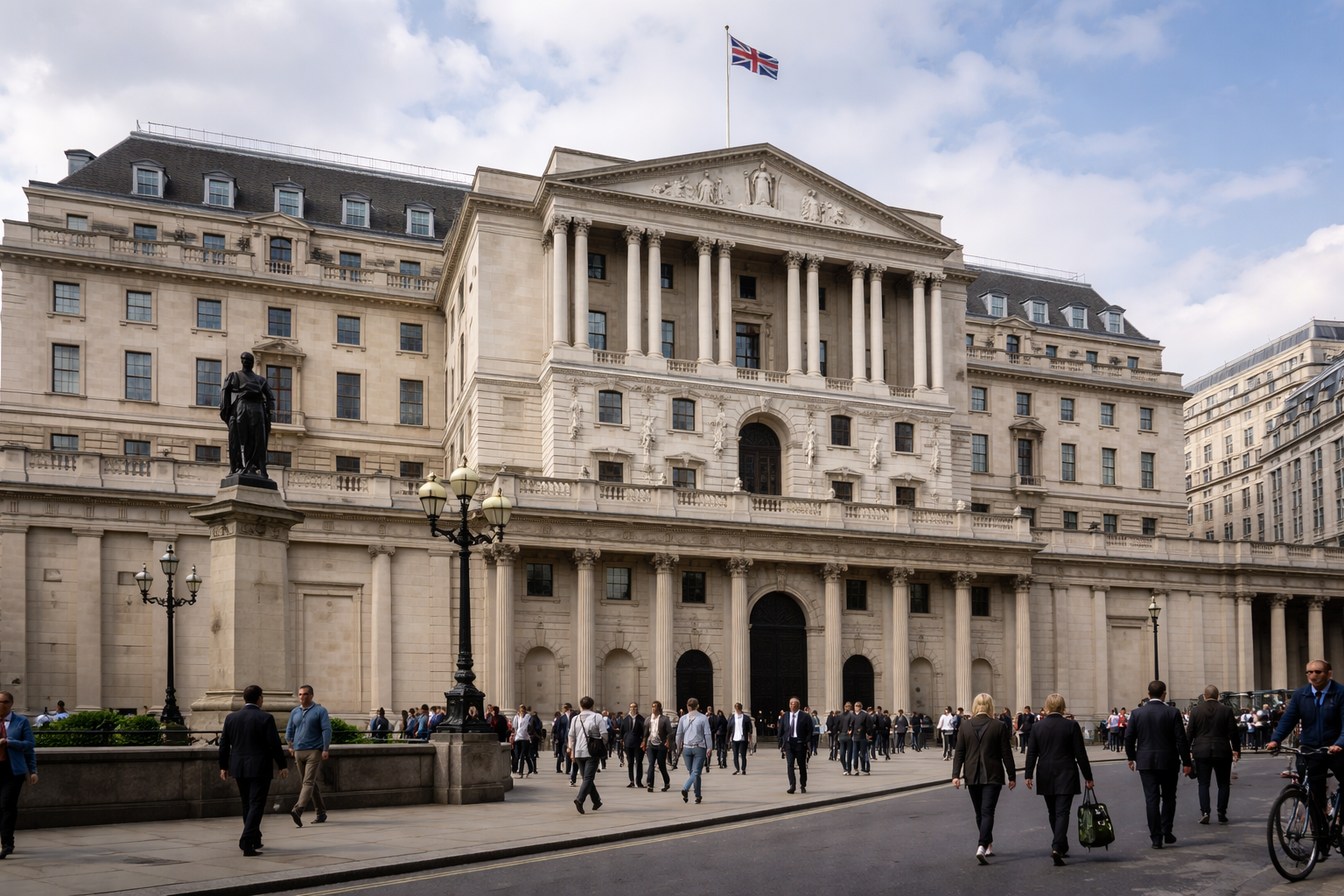
The Bank of England on Monday published its final policy statement and draft Code of Practice for systemic stablecoin issuers, easing some of the proposals it had put forward for industry consultation last year and setting out a clearer path for the development of regulated stablecoins in the UK.
The central bank said the framework is intended to support safe innovation while allowing UK-issued stablecoins to develop as trusted forms of digital money.
BoE replaces holding caps with issuance guardrail
The decision marks a change from the central bank’s earlier consultation proposals.
Rather than limiting how much of a stablecoin an individual could hold, the Bank said it would restrict the total amount that can be issued by each systemic stablecoin during the transition period.
According to the BoE, the issuance guardrail is intended to safeguard the economy’s access to credit while avoiding the operational complexity associated with holding limits.
The central bank said the revised approach would deliver the same policy outcome, but would be “cheaper and easier to implement”, while also allowing unrestricted use of stablecoins by households and businesses.
The Bank said the £40 billion guardrail would be reviewed regularly and removed once risks to credit provision have been addressed.
Backing asset rules eased after consultation feedback
The policy statement and draft rules reflect feedback received during last year’s consultation with industry and other stakeholders, the BoE said.
Among the key revisions, the Bank increased the maximum share of backing assets that systemic stablecoin issuers can hold in interest-bearing assets.
Under the final framework, issuers will be allowed to hold up to 70% of backing assets in short-term UK government debt, up from the 60% proposed previously.
The remainder must be held in central bank deposits.
The BoE said those central bank deposits would help issuers meet redemption requests promptly, while the revised asset mix would support more viable business models without undermining issuers’ ability to deal with outflows.
The central bank said the framework aims to give stablecoin issuers enough clarity to innovate and scale while maintaining resilience, confidence, and trust in money.
Bank and FCA to coordinate broader stablecoin regime
The Bank of England said it is working closely with the Financial Conduct Authority to create an end-to-end regulatory regime for stablecoins in the UK.
That work includes developing a managed transition process for firms as they move from being non-systemic to systemic operators.
The BoE said further details would be published alongside the FCA’s final rules.
Sarah Breeden, Deputy Governor for Financial Stability, described the publication of the policy statement and draft rules as a significant step in the UK’s payments and digital money framework.
“This is a major milestone in delivering greater choice and innovation in UK payments. Innovation thrives on trust. And today we’ve set out the foundations of that trust for a new form of money with prompt redemption, strong protections, and central bank support. This is truly a world-leading regime,” Breeden said.
Final rules expected by the end of 2026
The Bank said stakeholders have until 22 September 2026 to provide feedback on the draft Code of Practice.
Subject to that feedback, it intends to finalise the Code by the end of 2026.
Additional supporting materials are expected to follow as the Bank continues its joint work with the FCA.
The framework is expected to allow regulated stablecoins to operate in the UK from 2027, laying the groundwork for a formal regime for systemic issuers and broader adoption of digital payment innovations under central bank oversight.
The post Bank of England unveils final stablecoin rules, eases key proposals appeared first on Invezz